
If you’re considering a tummy tuck, chances are you’ve asked yourself one very specific question: Will I have to buy smaller jeans afterward? It’s one of the most common things patients want to know, and it makes sense. Clothing size feels like a tangible way to measure results.
But here’s the truth: while many patients do go down a size after surgery, the number on the tag doesn’t always tell the full story. What changes most after a tummy tuck isn’t just your size — it’s your shape, contour, and how your clothes fit your body.
Do Most Tummy Tuck Patients Go Down a Size?
- Many patients drop 1–3 clothing sizes, depending on how much excess skin and laxity are addressed.
- A tummy tuck is not a weight-loss procedure, it reshapes and tightens the abdomen rather than reducing overall body weight.
- Inches matter more than pounds, since improved contour and waist definition affect clothing fit more than the scale.
- Results depend largely on muscle repair and skin removal, especially in post-pregnancy or weight-loss patients.
- Your final clothing size typically stabilizes after swelling resolves, which can take several months.
Will You Actually Drop a Clothing Size After a Tummy Tuck?
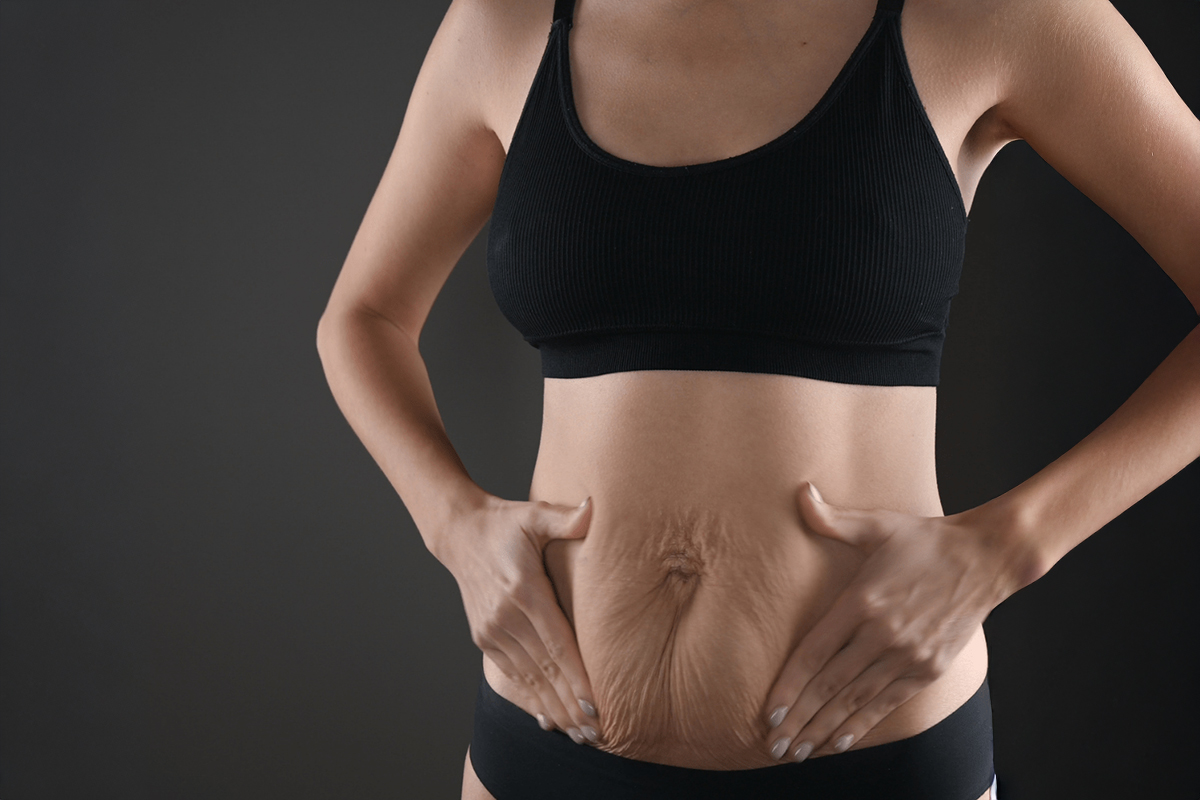
In many cases, yes, but it depends on your starting point. A tummy tuck (abdominoplasty) removes excess skin and tightens the abdominal muscles. If you have loose, hanging skin or a protruding lower abdomen caused by muscle separation (diastasis recti), correcting those issues can significantly flatten your midsection.
When the abdomen becomes flatter and tighter, waist measurements often decrease. That’s what leads to smaller clothing sizes.
However, clothing sizes vary widely between brands. A size 10 in one store may fit like an 8 or 12 somewhere else. That’s why surgeons don’t use clothing size as a clinical measurement of success.
Why Clothing Size Isn’t the Best Way to Measure Tummy Tuck Results
It’s natural to focus on the number on the tag — but it’s not the most accurate way to measure transformation.
Here’s why:
- Clothing brands are inconsistent.
- Body shape matters more than overall size.
- Muscle tightening changes posture and core support.
- Your silhouette becomes smoother and more proportional.
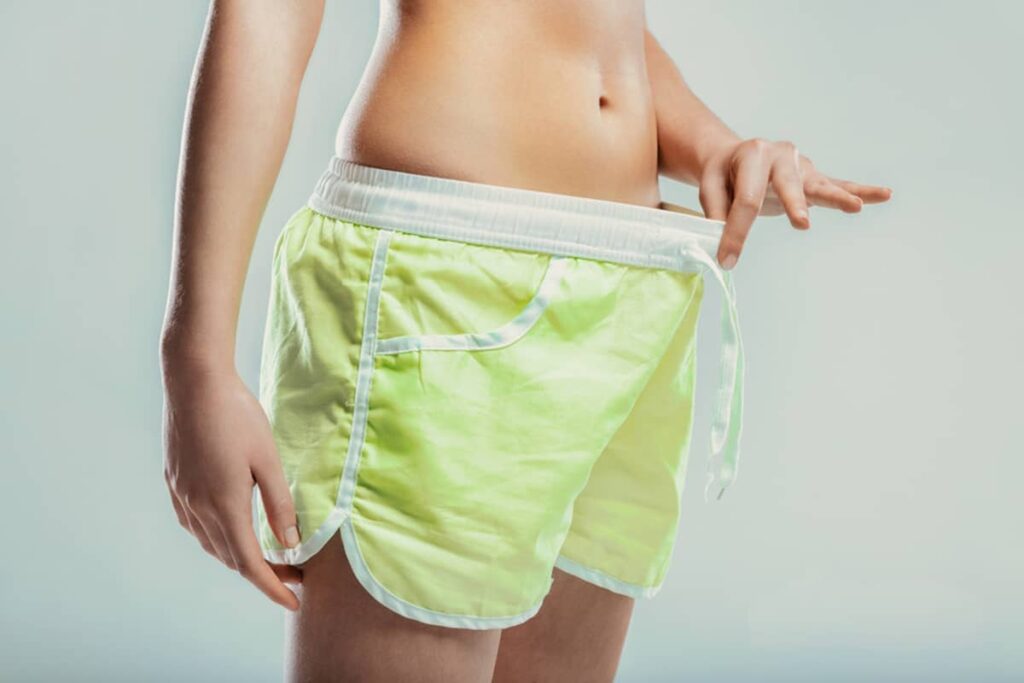
Many patients tell Dr. Allison that while the number may only change slightly, their clothes fit completely differently. Waistbands sit flatter. Fitted tops look smoother. Swimwear feels more comfortable.
Sometimes, it’s not about going down three sizes; it’s about finally feeling confident in your current one.
How Much Weight Do You Lose After a Tummy Tuck?
This is another common misconception.
A tummy tuck is not designed for weight loss. Most patients lose only a few pounds — typically the weight of the removed skin and small amounts of tissue.
If you are significantly overweight, your surgeon will usually recommend reaching a stable, healthy weight before surgery. The best candidates are already near their goal weight but struggle with loose skin or abdominal laxity that doesn’t improve with diet and exercise.
Think of it this way:
- Weight loss shrinks fat cells.
- A tummy tuck removes excess skin and repairs muscles.
- The scale may not change dramatically, but the mirror usually does.

TRUSTED, EXPERT CARE FOCUSED ON PRECISION AND CONFIDENCE
Dr. Allison provides patients throughout NJ and PA with expert care designed to deliver refined, natural-looking results.
What Actually Changes After Tummy Tuck Surgery?
The real transformation happens beneath the surface. A tummy tuck addresses several concerns at once:
- Excess Skin Removal: Loose, sagging skin — often caused by pregnancy or weight fluctuations — is removed.
- Muscle Repair (Diastasis Recti Correction): During pregnancy, the abdominal muscles naturally separate. Sometimes they don’t fully come back together. This condition, called diastasis recti, can cause a rounded or “pooching” appearance. Muscle repair restores a tighter, flatter core.
- Improved Contour: The midsection appears smoother and more toned.
- Potential Hernia Repair: If a hernia is present, it may be addressed during surgery.
The result is a firmer abdominal wall and improved waist definition — which is why clothing often fits differently afterward.
Who Is Most Likely to Go Down a Size?
While every patient is unique, certain individuals are more likely to notice a significant size reduction:
- Post-pregnancy patients with loose skin and muscle separation
- Patients who have lost a substantial amount of weight
- Individuals with significant skin laxity below the belly button
- Patients combining liposuction with their tummy tuck
If your main concern is excess skin rather than stubborn fat, you’re more likely to see a measurable size change.
During a consultation, Dr. David Allison evaluates skin elasticity, muscle separation, and fat distribution to determine what results are realistically achievable.
What Factors Determine Your Final Clothing Size?
Several variables influence how much your size changes:
- The amount of excess skin removed
- The degree of muscle separation repaired
- Your starting waist measurement
- Fat distribution patterns
- Whether liposuction is added
- Postoperative swelling
It’s important to understand that swelling can temporarily affect how clothing fits. Final results typically stabilize over several months as your body fully heals. This is why personalized surgical planning matters so much. No two abdomens respond the same way.
Can Liposuction Improve the Chances of Dropping a Size?
In many cases, yes. Liposuction is often combined with a tummy tuck to contour the flanks (love handles) and upper abdomen. While a tummy tuck addresses skin and muscle laxity, liposuction targets stubborn fat deposits.
When both procedures are performed together, patients may see:
- Greater waist definition
- More dramatic contouring
- Increased likelihood of dropping clothing sizes

For some patients with minimal skin laxity, liposuction alone may be sufficient. For others, it enhances tummy tuck results significantly.
Setting Realistic Expectations After a Tummy Tuck
One of the most important parts of any cosmetic procedure is setting realistic expectations.
A tummy tuck can:
- Flatten the abdomen
- Improve waist contour
- Repair muscle separation
- Remove excess skin
It cannot:
- Replace weight loss
- Prevent future weight gain
- Permanently “lock in” a clothing size
Patients who approach surgery with a clear understanding of these factors tend to be the happiest with their results. The goal isn’t chasing a specific size; it’s achieving a balanced, natural-looking contour that complements your body.
What Happens at Your Tummy Tuck Consultation?
Your consultation is where you get personalized answers, not general internet estimates. During your appointment, Dr. David Allison will:
- Evaluate your abdominal anatomy
- Assess skin laxity and muscle separation
- Discuss your goals
- Determine whether you need a mini, full, or circumferential abdominoplasty
- Review whether liposuction should be included
- Explain expected results and recovery
Patients in New Jersey and Philadelphia appreciate having a clear, honest conversation about what surgery can realistically achieve. This is where you’ll learn whether going down a size is likely for you, based on your body, not averages.

About Dr. David W. Allison
Dr. David W. Allison is a board-certified plastic surgeon providing cosmetic and reconstructive surgery of the breast and body. With more than 21 years of surgical experience, he offers breast augmentation procedures tailored to each patient’s anatomy, goals, and long-term health considerations.
He emphasizes careful surgical planning, patient education, and individualized treatment strategies designed to support both aesthetic results and functional outcomes. Patients receive comprehensive guidance throughout the consultation process to help them make informed decisions about breast surgery.
Schedule a Tummy Tuck Consultation in New Jersey and Philadelphia
If you’ve been wondering whether a tummy tuck will help you fit more comfortably in your clothes, the only way to know for sure is through a personalized evaluation.
Board-certified plastic surgeon Dr. David Allison provides customized tummy tuck procedures for patients throughout New Jersey and Philadelphia. Surgical planning is tailored to your anatomy, your goals, and your lifestyle.
If you’re ready to feel more confident in your clothing and finally address stubborn abdominal concerns, now may be the right time to take the next step. Call 609-831-0805 and schedule your tummy tuck consultation with Dr. Allison today and discover what’s realistically possible for you.