Choosing a breast implant size sounds simple — until you realize it’s not about picking a letter on a bra tag. Many women start their research thinking, “I just want to be a full C.” But implant sizing is far more precise — and far more personal — than cup size alone.
If you’re considering breast augmentation to restore lost volume, correct asymmetry, or enhance your natural shape, the real question isn’t just how big you want to be. It’s how you want your body to look, feel, and function long term. The right implant size should complement your anatomy, not overpower it.
Breast Implant Size Is More Than Just a Cup Size
- Implant size is measured in cubic centimeters (cc), not bra cup sizes.
- The same implant volume looks different on everybody.
- Implant diameter and projection matter just as much as volume.
- Your anatomy determines what size will look balanced and natural.
- A personalized consultation is the safest way to avoid sizing regret.
What Do Breast Implant “CCs” Mean and What Sizes Are Available?
When researching breast augmentation, you’ll often see implant sizes listed in CCs, which stands for cubic centimeters — a measurement of volume.
Breast implants typically range from about 150cc to 800cc, though most patients fall within the 250cc to 450cc range. However, the number itself can be misleading.
For example:
- 300cc on a petite frame may look significantly larger.
- The same 300cc on a broader chest may appear subtle.
That’s because implant size is not about hitting a specific bra cup. It’s about achieving proportion with your body. This is why experienced surgeons evaluate much more than just volume when guiding implant selection.
Do Different Types of Breast Implants Affect Size or Appearance?
When choosing breast implant size, many patients also wonder whether the type of implant changes how their results will look or feel. While implant material does not change how volume is measured (cc is still cc), it can influence texture, firmness, and overall aesthetics.
- Highly Cohesive (“Gummy Bear”) Implants
A thicker, form-stable silicone gel that maintains its shape. These can offer more structural support and predictable contour. - Saline Implants
Filled with sterile salt water after placement. They can feel slightly firmer and may show more rippling in patients with thinner tissue. - Silicone Implants
Pre-filled with silicone gel. These tend to feel softer and more similar to natural breast tissue.
The 3 Implant Dimensions That Determine Your Final Results
When patients focus only on cc volume, they’re missing two other equally important measurements.
Implant Volume (cc)
Volume determines how much overall fullness the implant adds. Higher cc numbers increase breast size, but volume alone does not dictate shape or projection.
Implant Diameter (Base Width)
Diameter refers to how wide the implant is across the chest. This must match your natural breast footprint. An implant that is too wide can extend beyond your natural breast boundaries. One that is too narrow may look overly projected.
Matching implant width to your chest wall is one of the most critical aspects of achieving natural-looking results.
Implant Projection (Profile)
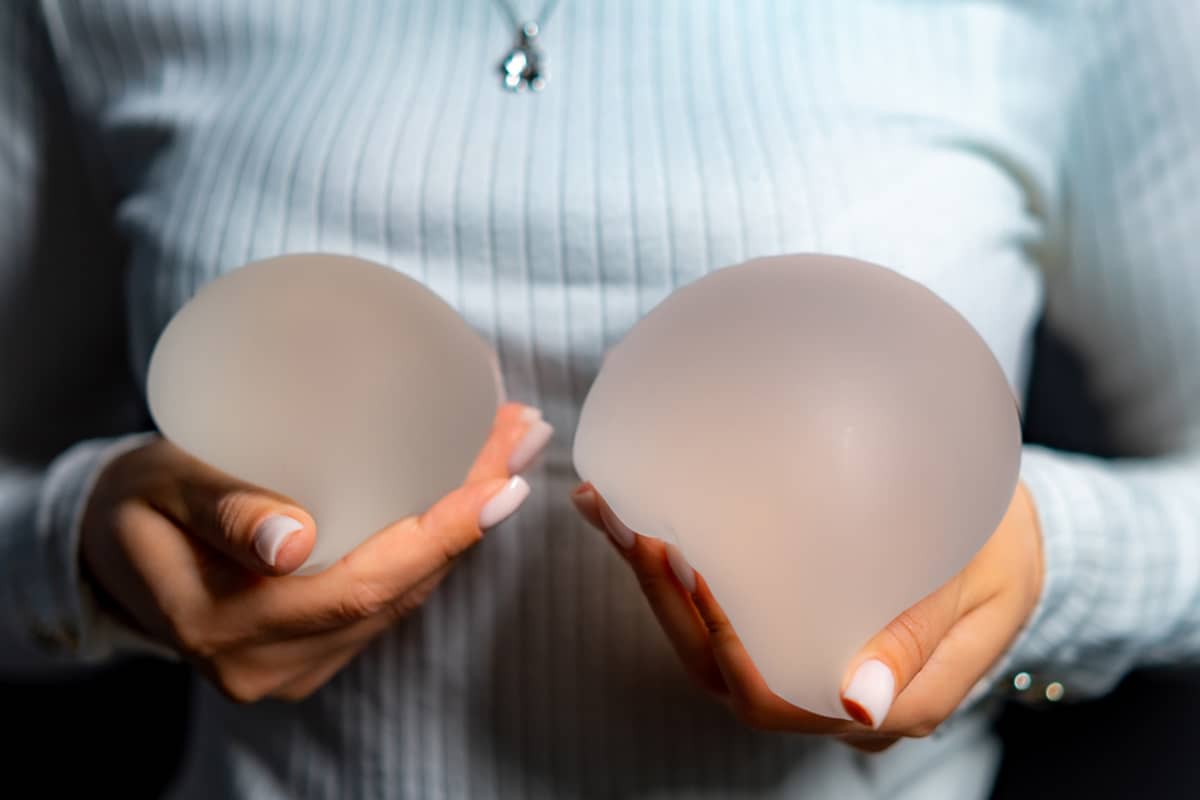
Projection refers to how far the implant extends outward from the chest. Low-profile implants are wider and flatter, while high-profile implants are narrower and project more forward.
Two implants can have the same volume but look completely different depending on their projection. That’s why selecting the right profile is just as important as selecting the right size.
How Your Anatomy Influences the Right Implant Size
No two patients have the same anatomy. Your natural tissue, skin quality, and chest structure all determine what implant size will look and feel appropriate.
How Does Natural Breast Tissue Thickness Affect Implant Choice?
If you have thinner natural tissue, very large implants may be more visible or palpable. Thicker tissue can better camouflage the implant edges.
Your tissue thickness helps determine:
- Expected softness of results
- Maximum safe implant size
- Ideal implant placement
Why Does Skin Elasticity Matter When Choosing Implant Size?
Skin elasticity determines how well your tissue can accommodate added volume.
If skin is tight, going too large too quickly can:
- Increase discomfort
- Affect long-term support
- Raise the risk of complications
If skin has stretched from pregnancy or weight loss, different sizing considerations apply.
Does Implant Placement (Over or Under the Muscle) Change Size Appearance?
Yes. Implant placement affects how the size appears and feels.
- Under the muscle may soften the look of larger implants
- Over the muscle may enhance projection
Placement decisions are made in conjunction with size selection to achieve natural-looking results.
How Do Chest Width and Body Frame Influence Implant Selection?
Your rib cage width sets a natural limit on implant diameter. Choosing an implant that exceeds your anatomical width can compromise aesthetics and long-term support. Height, shoulder width, and torso length also influence what looks proportional.

TRUSTED, EXPERT CARE FOCUSED ON PRECISION AND CONFIDENCE
Dr. Allison provides patients throughout NJ and PA with expert care designed to deliver refined, natural-looking results.
Step-by-Step: How Surgeons Determine the Right Breast Implant Size
Choosing the right breast implant size is a structured, medical decision, not guesswork. Here’s how an experienced, board-certified plastic surgeon approaches implant sizing:
Step 1: Detailed Anatomical Measurements
Your chest width, breast base diameter, skin quality, and tissue thickness are carefully measured. These measurements narrow down safe implant ranges.
Step 2: Discussion of Aesthetic Goals
Do you want subtle enhancement? Noticeable fullness? Upper-pole projection? Proportional balance? Your goals guide the refinement process.
Step 3: Evaluation of Implant Dimensions
Volume (cc), diameter, and projection are matched to your anatomy — not just your desired cup size.
Step 4: In-Office Sizing & Visualization
You’ll try implant sizers and, when available, review 3D imaging simulations to better understand potential outcomes.
Step 5: Long-Term Planning
Implant size decisions consider aging, tissue support, and lifestyle — not just how you’ll look immediately after surgery.
This personalized approach significantly reduces the likelihood of dissatisfaction or revision surgery. If you’re considering breast augmentation in New Jersey or Philadelphia, scheduling a consultation ensures your implant size is selected based on precision, not approximation.
What Happens If I Choose an Implant That’s Too Big or Too Small?
This is one of the most important questions to ask.
Research shows that a significant percentage of breast revision surgeries are performed because patients want to change implant size. In other words, sizing regret is common — and often avoidable.
Implants that are too large may:
- Stretch skin prematurely
- Cause thinning of tissue over time
- Increase sagging
- Feel heavier than expected
- Lead to long-term dissatisfaction
Implants that are too small may:
- Leave patients wishing they had gone larger
- Result in a second surgery
Revision surgery means additional cost, recovery, and stress. That’s why thoughtful, anatomy-based planning is critical the first time.
How Does Breast Implant Size Affect Long-Term Results?
Implant size influences how your breasts age over time. Larger implants place more weight on breast tissue and skin. Over many years, this can contribute to earlier sagging, particularly if skin elasticity is limited.
Balanced sizing supports:
- Long-term tissue health
- Stable positioning
- A more natural aging process
When selecting implant size, you’re not just choosing how you’ll look next month — you’re choosing how your results will look years from now.

How Can I Visualize What Different Breast Implant Sizes Will Look Like?
Visualization tools help bridge the gap between numbers and real-life results.
The Rice Test (At-Home Estimation Tool)
The rice test is a popular at-home method. By placing measured amounts of uncooked rice into stockings or small bags and inserting them into a bra, you can simulate additional volume.
As a general reference, 1 ounce of rice equals approximately 30cc.
However, this method has limitations. It cannot replicate implant shape, projection, or muscle placement. It should be used only as a rough visual tool, not a final decision-maker.
In-Office Sizing and 3D Simulation
During your consultation with Dr. David Allison, you may:
- Try on implant sizers inside a surgical bra
- View 3D imaging simulations (if applicable)
- Compare before-and-after photos of similar body types
These tools provide a far more accurate preview of what different sizes may look like on your specific frame.
Should I Bring Inspiration Photos to My Consultation?
Absolutely. Photos can help communicate the aesthetic you’re drawn to. However, keep in mind that body proportions differ. The goal isn’t to replicate someone else’s result — it’s to achieve your best proportionate outcome.
Does My Lifestyle or Future Pregnancy Plans Affect Implant Size?
Yes, and this is often overlooked. If you live a very active lifestyle, excessively large implants may feel uncomfortable during high-impact exercise.
If you’re planning future pregnancies, your breast tissue may change again. While implants do not prevent pregnancy, natural breast fluctuations can influence long-term appearance.
Weight stability also matters. Significant weight gain or loss can alter results regardless of implant size.
A thoughtful sizing discussion should include your long-term plans — not just your short-term aesthetic goals.
Why Choosing a Board-Certified Plastic Surgeon Matters for Implant Sizing
Breast implant sizing is both an art and a science. Working with a board-certified plastic surgeon ensures:
- Proper anatomical measurements
- Safe implant selection
- Balanced proportions
- Reduced risk of revision
- Long-term outcome planning
Dr. David Allison, serving patients in New Jersey and Philadelphia, applies a meticulous, individualized approach to breast augmentation.
Implant sizing is not about selling the largest implant, it’s about achieving harmony with your body. Choosing the right surgeon is just as important as choosing the right size.
About Dr. David W. Allison
Dr. David W. Allison is a board-certified plastic surgeon providing cosmetic and reconstructive surgery of the breast and body. With more than 21 years of surgical experience, he offers breast augmentation procedures tailored to each patient’s anatomy, goals, and long-term health considerations.
He emphasizes careful surgical planning, patient education, and individualized treatment strategies designed to support both aesthetic results and functional outcomes. Patients receive comprehensive guidance throughout the consultation process to help them make informed decisions about breast surgery.
Schedule Your Personalized Breast Augmentation Consultation With Dr. David Allison
If you’re unsure what size breast implant is right for you, the most important step is a personalized consultation. During your visit with Dr. David Allison, a board-certified plastic surgeon serving New Jersey and Philadelphia, you’ll receive precise measurements, professional recommendations, and expert guidance tailored to your anatomy and aesthetic goals.
Choosing implant size is not something you should leave to guesswork or online charts. A consultation allows you to move forward with clarity and confidence. Call 609-831-0805 and schedule your appointment today to receive individualized recommendations and take the next step toward results that feel balanced, natural, and right for you.
Frequently Asked Questions About Breast Implant Size