
Breast reduction surgery ranks among the highest in patient satisfaction of any plastic surgery procedure, and it’s easy to understand why. Patients routinely report significant improvements in comfort, confidence, and quality of life after the procedure. But breast reduction isn’t a one-size-fits-all operation. There are several breast reduction techniques available, and the right approach depends on your breast anatomy, the amount of reduction needed, and your overall goals. Understanding the options can help you walk into your consultation with better questions and clearer expectations.
Dr. David Allison performs breast reduction surgery for patients throughout New Jersey and the Philadelphia area, tailoring the surgical technique to each patient’s individual anatomy and desired results.
What Your Breast Reduction Options Come Down To
- The three primary breast reduction techniques are the anchor (inverted-T) incision, the vertical (lollipop) incision, and liposuction-based reduction — each suited to different breast sizes and goals.
- Incision pattern determines both how much tissue can be removed and where permanent scars will be located.
- The anchor technique is the most versatile and is typically recommended for patients with very large, heavy breasts or significant drooping.
- Vertical breast reduction works well for moderate reductions and tends to leave less scarring than the anchor approach.
- Liposuction breast reduction is appropriate only in select cases where excess breast tissue is primarily fatty rather than glandular.
What Breast Reduction Surgery Actually Does
Reduction mammoplasty — the formal term for breast reduction surgery — removes excess breast tissue, skin, and fat to reduce breast size, improve breast shape, and reposition the breast for a more proportionate appearance. In most cases, the nipple and areola are also repositioned higher on the chest as part of the procedure, and the areola may be reduced in size if needed.
The benefits of breast reduction extend well beyond aesthetics. Women with large, heavy breasts commonly experience chronic neck and back pain, shoulder grooving from bra straps, skin irritation beneath the breast fold, and difficulty participating in physical activities comfortably. Reduction surgery addresses all of these concerns while also improving breast shape and symmetry. It is among the plastic surgery procedures with the highest patient satisfaction rates across cosmetic surgery outcomes data.
The Three Main Breast Reduction Techniques
The surgical technique a cosmetic surgeon selects is based primarily on the patient’s breast anatomy, the volume of excess breast tissue to be removed, the degree of breast drooping present, and the desired final breast size. No single approach is superior in every situation — the best technique is the one that is most appropriate for a given patient’s starting point and goals.
Anchor (Inverted-T) Breast Reduction
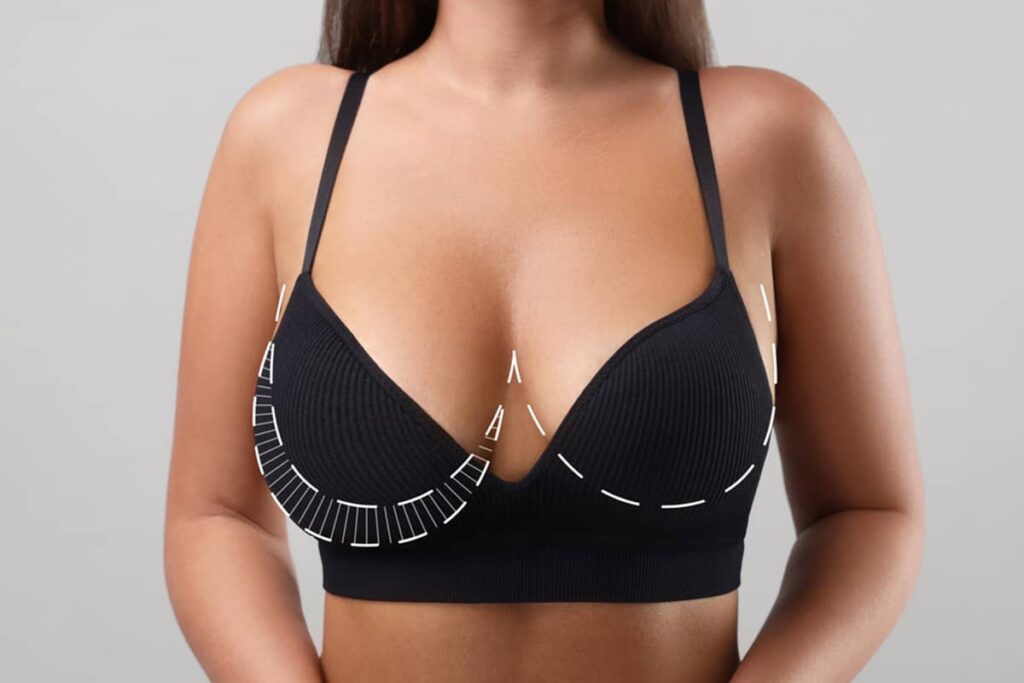
The anchor technique, also called the inverted-T or Wise pattern reduction, is the most established breast reduction procedure and remains the most commonly used approach for patients requiring significant reductions. The incision follows three paths: around the areola, vertically from the base of the areola down to the breast crease, and horizontally along the breast fold itself. Together, these three lines form the anchor shape the technique is named for.
Because the anchor incision provides the most direct access to breast tissue, it allows surgeons to remove larger volumes of tissue with greater precision and to significantly reshape the breast. For women with very large or heavy breasts, substantial drooping, or significant asymmetry, this approach generally delivers the most controlled and reliable results of breast reduction surgery. The trade-off is that the horizontal scar along the breast fold is permanent, though it is positioned so that it remains hidden beneath clothing and swimwear. Scarring typically fades considerably over time with proper care.
Vertical (Lollipop) Breast Reduction
The vertical breast reduction technique, commonly called the lollipop incision, uses two incision lines: one encircling the areola and one running vertically from the bottom of the areola down to the breast crease. There is no horizontal incision along the breast fold, which is the key distinction from the anchor approach.
This technique works particularly well for patients needing a moderate reduction in breast size and who have a manageable degree of drooping. Because it involves less incision length overall, the resulting scarring is more limited — the vertical incision scar and the circular scar around the areola are the only permanent marks, and both are positioned to be well-concealed. Many patients and surgeons prefer the vertical technique when the anatomy supports it, because the results of breast reduction surgery achieved this way can be quite natural-looking with a smooth, rounded breast contour.
Liposuction-Based Breast Reduction
In certain carefully selected patients, liposuction alone can be used to reduce breast size without the incisions required by the techniques above. This approach is most appropriate when the breasts are composed primarily of fatty tissue rather than dense glandular tissue, when only a modest reduction in size is needed, and when the breasts have adequate skin elasticity and minimal drooping.
The primary advantage of liposuction breast reduction is that it leaves only tiny puncture marks rather than visible scars. Recovery tends to be somewhat faster than with excision-based techniques. However, it is not suitable for patients who need significant volume reduction, who have dense glandular breast tissue, or who require nipple repositioning or skin removal to address sagging. Liposuction may also be used in combination with excision techniques in some cases to refine the results of breast reduction procedures that primarily use surgical removal of tissue.

TRUSTED, EXPERT CARE FOCUSED ON PRECISION AND CONFIDENCE
Dr. Allison provides patients throughout NJ and PA with expert care designed to deliver refined, natural-looking results.
Choosing the Right Technique: What the Consultation Reveals
There is no shortcut for the consultation process. The right breast reduction technique for any individual patient can only be determined after a physical examination, a detailed discussion of goals, and a review of health history and anatomy. During a consultation with Dr. Allison, measurements and proportions are assessed, and the degree of reduction that will achieve a balanced, natural result is discussed in detail.
Patients are encouraged to be specific about what bothers them — whether that’s physical discomfort from heavy breasts, difficulty finding bras and clothing that fit, limitations on physical activities, or aesthetic concerns about breast size and shape. This information helps guide not just the technique selection but also the target size and breast shape that will best serve each individual.
The consultation is also the appropriate time to discuss realistic expectations for scarring, recovery, and the results of breast reduction surgery over time.
Recovery After Breast Reduction Surgery
Most patients are able to return to light daily activity within a few days to one week following surgery. Strenuous physical activities, heavy lifting, and exercise are typically restricted for four to six weeks to allow proper healing. A surgical bra is worn in the weeks following the procedure to support the breasts during recovery, and most cosmetic surgeons recommend avoiding underwire bras until cleared to do so.
Swelling will gradually subside over several months, and the final breast shape and position continue to settle during that time. Incision lines are permanent but typically fade significantly over the course of one to two years, particularly with attentive scar care during recovery.
It’s also worth noting that a mammogram is often recommended before surgery for appropriate candidates, and follow-up mammograms remain part of routine breast health care after the procedure.
About Dr. David W. Allison
Dr. David W. Allison is a board-certified plastic surgeon providing cosmetic and reconstructive surgery of the breast and body. With more than 21 years of surgical experience, he offers breast augmentation procedures tailored to each patient’s anatomy, goals, and long-term health considerations.
He emphasizes careful surgical planning, patient education, and individualized treatment strategies designed to support both aesthetic results and functional outcomes. Patients receive comprehensive guidance throughout the consultation process to help them make informed decisions about breast surgery.
Schedule Your Breast Reduction Consultation with Dr. David Allison
If you’ve been living with the physical discomfort and limitations that often accompany large, heavy breasts — or you simply want to achieve a more proportionate breast size — breast reduction surgery may be worth exploring. Understanding which surgical technique is most appropriate for your anatomy and goals is the first step, and that begins with a one-on-one consultation.
Dr. David Allison serves patients throughout New Jersey and the Philadelphia area at multiple convenient locations. Contact the office today to schedule your consultation.
Frequently Asked Questions About Breast Reduction Techniques