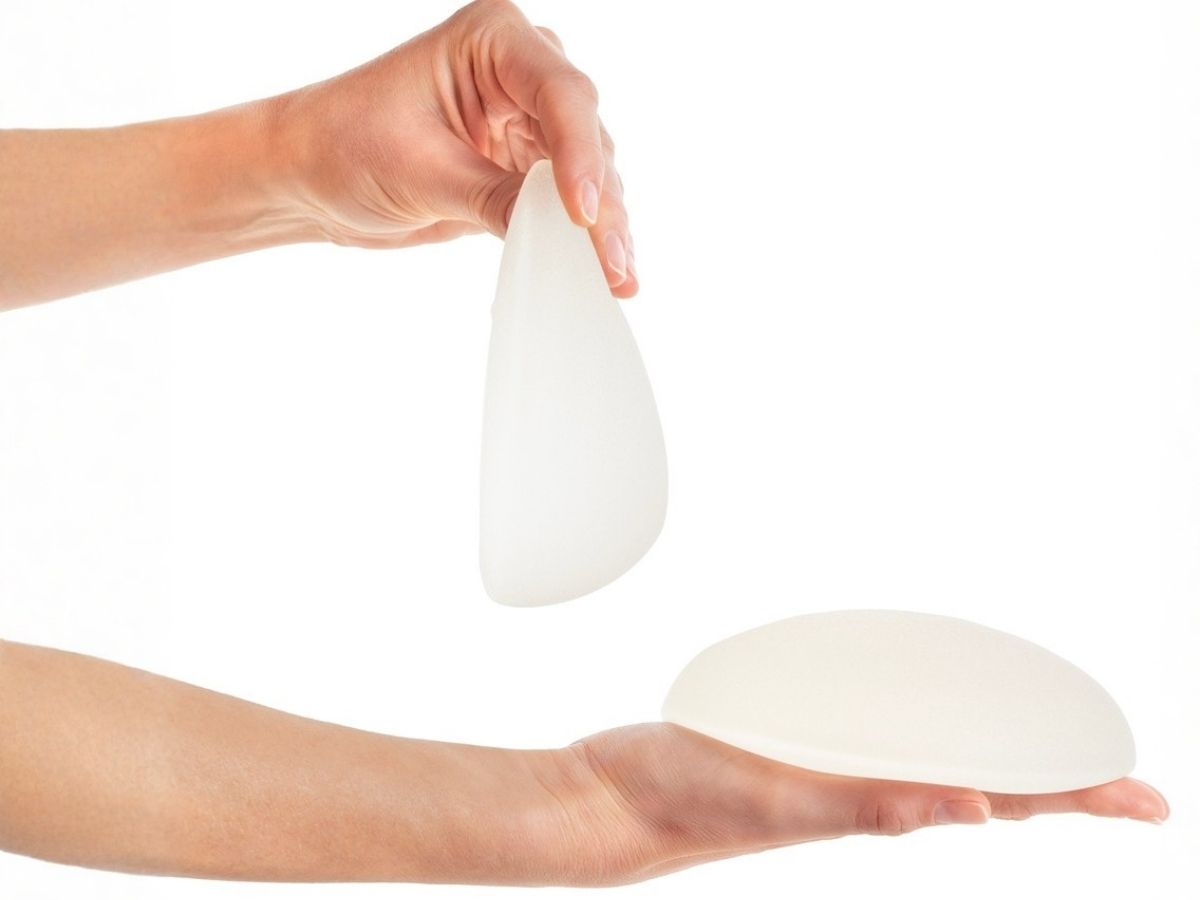
When researching breast augmentation, one of the first decisions you’ll encounter is implant shape — and the two primary options are round vs. teardrop implants. Both can produce beautiful, natural-looking results, but they achieve those results differently, and the better choice depends on your anatomy, your aesthetic goals, and what matters most to you in terms of appearance and feel. Understanding how each shape is designed can help you walk into your consultation with a clearer sense of what to discuss.
Dr. David Allison works with patients throughout New Jersey and the Philadelphia area to identify the implant options best suited to their individual starting points and goals. Here’s what you should know about both shapes before your visit.
Shape Is Just the Starting Point
Before diving into the differences between round and teardrop implants, it’s worth noting that shape is one of several variables that influence your final result. Implant size, profile, material, and placement all play equally important roles. That said, shape does meaningfully affect overall contour, upper breast fullness, and how closely the result resembles a natural breast silhouette.
Five Things to Know Before Your Consultation
- Round implants are symmetrical in all directions, so rotation after placement does not affect their appearance.
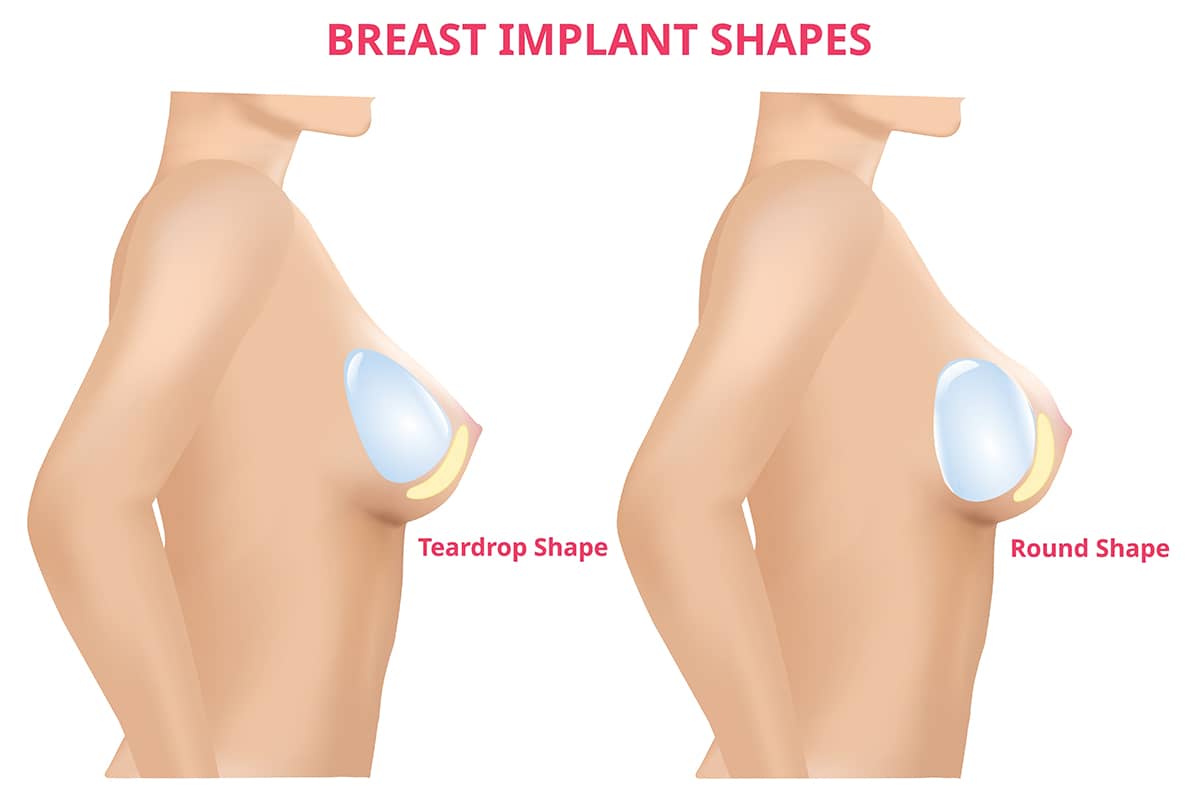
- Teardrop implants, also called anatomical implants, are designed to mimic the natural slope of the breast — fuller at the base and tapered toward the top.
- Neither shape is universally superior; the right choice depends on your body type, existing breast tissue, and aesthetic goals.
- Most teardrop implants have a textured surface to help keep them in position, and the evolving safety profile of textured implants is worth discussing with your surgeon.
- A thorough consultation with a board-certified plastic surgeon is the only reliable way to determine which implant shape will work best for your frame.
What Are Round Breast Implants?
Round implants are the most widely used shape in cosmetic breast augmentation. As the name suggests, they are uniformly circular — the same shape in every direction. This symmetry is one of their most practical advantages: because the implant looks the same regardless of its orientation, any minor movement or rotation inside the breast pocket has no effect on appearance.
Round implants are available in a range of profiles, which refers to how far the implant projects forward from the chest wall. A higher profile produces more forward projection from a narrower base, while a lower profile spreads across a wider footprint. This makes round implants highly adaptable to different chest widths and body proportions.
What Round Implants Deliver
Round implants provide volume throughout the entire breast, including the upper pole — the area above the nipple. This added fullness in the upper breast is a defining characteristic of round implants and produces the enhanced, lifted appearance that many augmentation patients seek. They also tend to create more prominent cleavage than anatomical options.
For patients who already have a reasonable amount of breast tissue and good skin elasticity, round implants can produce results that appear quite natural. The key is working with a surgeon who selects the right size and profile for your proportions — an implant that is too large or too high-profile for a given patient’s anatomy will look noticeably augmented rather than balanced.
Pros and Cons of Round Implants
Round implants are versatile, widely available, and technically straightforward to place. Because they’re symmetrical, there is no risk that rotation will alter the result — a meaningful practical advantage. They are well-suited for patients seeking visible upper breast fullness, enhanced cleavage, or a more dramatic enhancement overall.
On the other side, the fuller upper pole that round implants create may not be the right aesthetic for everyone. Patients with very little natural breast tissue, a very slender frame, or a strong preference for a subtle, understated result may find that round implants produce more of an augmented look than they had in mind.
What Are Teardrop (Anatomical) Breast Implants?
Teardrop implants — also called anatomical implants or shaped implants — are designed to follow the natural contour of the breast. They are fuller and more projected at the lower portion of the implant and taper gradually toward the top, creating a gentle slope that mirrors how natural breast tissue is distributed.
Because the shape is not symmetrical, teardrop implants must maintain a fixed orientation inside the breast pocket. To help with this, most anatomical implants have a textured surface rather than a smooth one. It’s worth noting that following a 2019 recall of a specific line of macro-textured implants by Allergan due to a rare lymphoma risk (BIA-ALCL), the landscape around textured implants has evolved. Patients considering teardrop implants should have an open conversation with their surgeon about current options and any relevant safety considerations.
What Teardrop Implants Deliver
The primary appeal of anatomical implants is their natural-looking result. Because the shape closely follows the breast’s own contour, the outcome tends to look and feel less augmented — particularly in the upper pole, which remains soft and tapered rather than full and rounded. This can be especially well-suited for patients with minimal natural breast tissue, where a rounder implant might appear more pronounced.
Teardrop implants are also commonly used in breast reconstruction following mastectomy, where replicating the natural breast shape as closely as possible is often a priority.
Pros and Cons of Teardrop Implants
For patients whose goal is a subtle, understated enhancement — or who are starting with very little tissue and want results that don’t appear visibly augmented — anatomical implants offer a distinct advantage in terms of natural appearance.
The considerations with teardrop implants center primarily on their fixed orientation requirement. If an anatomical implant rotates within the breast pocket, it can produce a visibly distorted or asymmetrical result that requires revision surgery to address. Teardrop implants also tend to carry a higher cost than round implants, and their availability has shifted somewhat in recent years given changes in the textured implant market. These are all factors worth discussing in detail with your surgeon before making a decision.

TRUSTED, EXPERT CARE FOCUSED ON PRECISION AND CONFIDENCE
Dr. Allison provides patients throughout NJ and PA with expert care designed to deliver refined, natural-looking results.
Round and Teardrop Breast Implants: How They Compare
Shape and Contour
Round implants distribute volume evenly throughout the breast, including above the nipple. Teardrop implants concentrate fullness at the lower half of the breast and produce a softer, more sloped upper pole. The right contour depends entirely on what you’re hoping to see.
Upper Breast Fullness
This is often the most visible difference between the two shapes. Patients who want noticeable upper breast volume tend to favor round implants. Those who prefer a more gradual, natural transition from the chest to the nipple often find teardrop implants more appealing.
Rotation and Stability
Round implants can rotate freely without any cosmetic consequence — their symmetry means the result looks the same in any orientation. Teardrop implants require precise and stable placement. If a shaped implant shifts, the asymmetry will typically be visible, and revision surgery may be needed to correct it.
Natural Appearance
Both shapes are capable of producing natural-looking results when properly sized and placed by an experienced plastic surgeon. The idea that teardrop implants always look more natural than round ones is a common oversimplification. A round implant that is appropriately proportioned to the patient’s frame and positioned correctly can look just as natural — sometimes more so. Conversely, a teardrop implant that rotates will look anything but natural. The surgeon’s expertise and the fit between implant and patient matter far more than shape alone.
How Plastic Surgeons Help You Choose the Right Implant Shape
During your consultation, Dr. Allison will evaluate your chest dimensions, the amount and distribution of your natural breast tissue, skin elasticity, and your overall body proportions. He’ll ask about your goals and discuss what each shape realistically can and cannot achieve given your starting anatomy.
For patients with limited breast tissue who want a subtle result, anatomical implants may offer distinct advantages. For patients seeking more visible enhancement, improved cleavage, or upper pole fullness, round implants are often the stronger choice. Many patients come in with a clear preference in mind — and in many cases, that preference aligns well with what’s surgically appropriate. When it doesn’t, an honest conversation about what will actually look best on your specific frame is the most valuable part of the consultation.
About Dr. David W. Allison
Dr. David W. Allison is a board-certified plastic surgeon providing cosmetic and reconstructive surgery of the breast and body. With more than 21 years of surgical experience, he offers breast augmentation procedures tailored to each patient’s anatomy, goals, and long-term health considerations.
He emphasizes careful surgical planning, patient education, and individualized treatment strategies designed to support both aesthetic results and functional outcomes. Patients receive comprehensive guidance throughout the consultation process to help them make informed decisions about breast surgery.
When to Schedule a Breast Augmentation Consultation in NJ & Philadelphia
If you’re weighing your options for breast augmentation surgery and want guidance on implant shape, size, and placement from a board-certified plastic surgeon, the next step is a consultation. There’s no single right answer when it comes to round and teardrop implants — the right answer is the one that fits your goals, your anatomy, and your lifestyle.
Dr. David Allison sees patients at locations throughout New Jersey and the Philadelphia area. Contact the office today to schedule your consultation.
Frequently Asked Questions About Round vs. Teardrop Implants