
Breast augmentation has been one of the most requested cosmetic procedures for decades, but the options available today are far more advanced than they used to be. If you’ve started researching, you’ve probably already realized something: there isn’t just one type of implant to choose from.
So, which is the best breast implant? The honest answer is that the best implant depends entirely on your anatomy, your goals, and the expertise of your surgeon. At his New Jersey and Philadelphia practice, board-certified plastic surgeon Dr. David Allison helps patients navigate these choices every day with a personalized, safety-first approach.
Which Breast Implant Is Best for Your Goals?
- Silicone implants are the most popular choice because they typically look and feel more like natural breast tissue.
- Saline implants allow for size adjustments during surgery and make rupture detection immediately noticeable.
- Cohesive gel (“gummy bear”) implants hold their shape well and can provide a more structured, defined contour.
- Your natural breast tissue, skin elasticity, and chest shape play a major role in determining which implant will look best on you.
- The “best” implant is the one that complements your body proportions and aesthetic goals — not simply the most common option.
Why There Is No One-Size-Fits-All “Best” Breast Implant
Every woman’s body is different. Skin elasticity, chest wall shape, existing breast tissue, and lifestyle all influence which implant will deliver the most balanced and natural-looking result.
For example:
- A patient with thinner breast tissue may benefit from silicone gel to reduce visible rippling.
- Someone who wants subtle enhancement might consider fat grafting.
- A patient prioritizing adjustability during surgery may prefer saline.
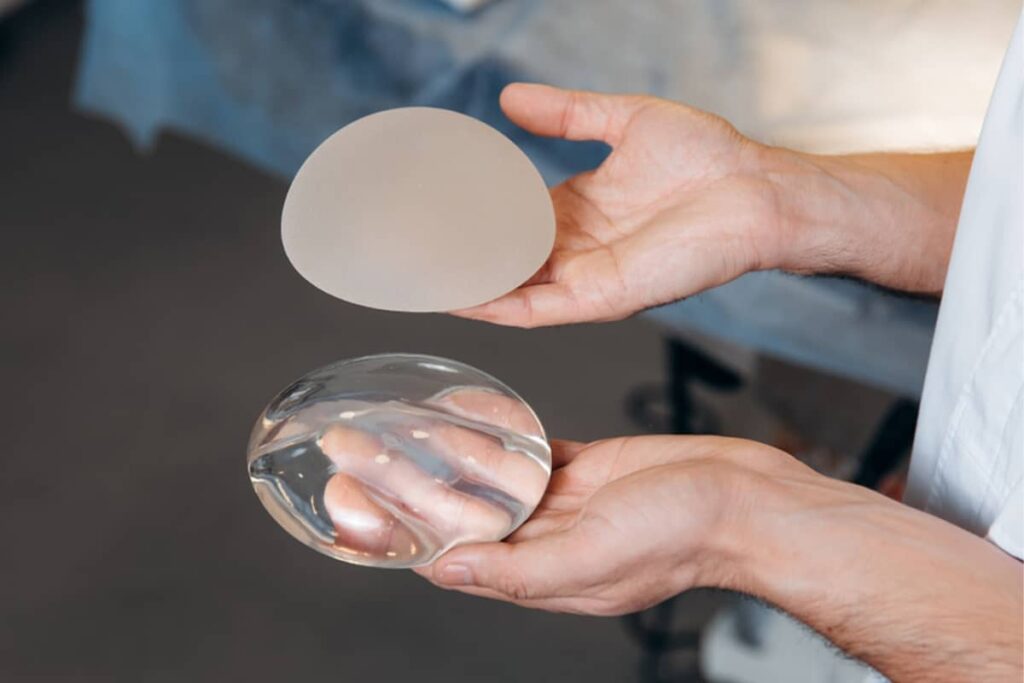
Breast augmentation today is highly customized. The goal isn’t simply to “go bigger”, it’s to create proportion, symmetry, and harmony with your overall figure.
What Are the Main Types of Breast Implants?
Understanding your options makes the decision process much less overwhelming.
What Are Saline Breast Implants?
Saline implants are filled with sterile saltwater. They may be prefilled or filled during surgery, which allows for small size adjustments at the time of placement.
Advantages:
- A smaller incision may be possible
- Implant deflation is immediately noticeable if rupture occurs
- Adjustable fill volume during surgery
Considerations:
- May feel slightly firmer than silicone
- Higher chance of visible rippling in thinner patients
While not as commonly selected as silicone today, saline implants remain a safe and effective option for the right candidate.
What Are Silicone Gel Breast Implants?
Silicone implants are pre-filled with a soft, cohesive gel designed to closely mimic natural breast tissue.
Advantages:
- More natural look and feel
- Reduced visible rippling
- Widely preferred by patients
Considerations:
- A slightly longer incision may be required
- Silent rupture is possible, meaning imaging is needed to detect leakage
For many patients seeking the most natural aesthetic, silicone implants are often the preferred choice.
What Are Cohesive Gel (“Gummy Bear”) Implants?
Cohesive gel implants, often called gummy bear implants, contain a thicker silicone gel that maintains its shape even if the shell is compromised.
These implants:
- Hold their shape exceptionally well
- May provide more upper pole structure
- Are available in both round and anatomical (teardrop) forms
They can be particularly helpful for patients seeking a more structured contour.
What Is Fat Transfer Breast Augmentation?
Fat transfer breast augmentation is a natural alternative to traditional implants. Instead of using a silicone or saline implant, this procedure uses your own fat to enhance breast volume and shape.
Fat is gently removed through liposuction from areas such as the abdomen, thighs, or hips. After purification, the fat is strategically injected into the breasts to create a subtle, natural-looking enhancement.
This approach is ideal for women who:
- Want a modest increase in size (typically about one cup size)
- Prefer to avoid synthetic implants
- Are looking to improve shape and symmetry
- Would also benefit from contouring in a donor area
Because your own tissue is used, there is no risk of implant rupture or capsular contracture. However, fat transfer is not designed for dramatic size increases, and not all transferred fat survives long-term, which means careful planning and technique are essential.
Saline vs. Silicone Implants: What’s the Real Difference?
When comparing saline and silicone, the biggest distinctions are:
- Feel: Silicone tends to feel softer and more natural.
- Appearance: Silicone reduces rippling in patients with less tissue coverage.
- Rupture detection: Saline deflates visibly; silicone requires imaging.
- Incision size: Silicone may require a slightly larger incision.
- Cost: Silicone implants are generally more expensive.
For most women prioritizing natural results, silicone is often favored, but your anatomy ultimately determines the best option.

TRUSTED, EXPERT CARE FOCUSED ON PRECISION AND CONFIDENCE
Dr. Allison provides patients throughout NJ and PA with expert care designed to deliver refined, natural-looking results.
Which Breast Implants Look and Feel the Most Natural?
This is one of the most common questions patients ask.
Generally, silicone implants, particularly cohesive gel implants, provide the most natural feel. However, implant placement also plays a role. Submuscular placement (under the muscle) often enhances softness and reduces visible edges.
Equally important is choosing the right size and profile. An implant that’s proportionate to your frame will almost always look more natural than one that overwhelms your anatomy.
Dr. Allison carefully evaluates tissue thickness, chest dimensions, and aesthetic goals to create balanced, refined results for patients throughout New Jersey and Philadelphia.
What Is the Safest Type of Breast Implant?
All modern breast implants used in the United States are FDA-approved and considered safe when placed by a qualified plastic surgeon. It’s natural to have questions about safety. Here’s what you should know.
Rupture and Leak Differences (Saline vs Silicone)
If a saline implant ruptures, it deflates quickly, and the body absorbs the saline safely. Silicone implant ruptures may be “silent,” meaning they are not immediately noticeable. That’s why periodic imaging is recommended.
Capsular Contracture Explained
Capsular contracture occurs when scar tissue tightens around the implant, potentially causing firmness or distortion. While uncommon, it is a known risk of any implant surgery. Meticulous surgical technique and proper implant placement significantly reduce this risk.
Textured Implants and Rare ALCL Risk
A rare condition called Breast Implant-Associated Anaplastic Large Cell Lymphoma (BIA-ALCL) has been linked primarily to certain textured implants. Today, most surgeons — including Dr. Allison — primarily use smooth implants, which have an extremely low associated risk.
Monitoring and Imaging Recommendations
The FDA recommends periodic imaging for silicone implants to screen for silent rupture. Ultrasound or MRI may be advised based on your timeline and symptoms. Regular follow-up appointments ensure long-term safety.
How Surgical Technique Impacts Safety
Implant type matters — but surgical expertise matters more. A board-certified surgeon like Dr. David Allison prioritizes sterile technique, precise pocket creation, and individualized planning to optimize both safety and aesthetic outcomes.
How Long Do Breast Implants Last?
Breast implants are durable, but they are not lifetime devices. Many implants last 10–20 years or longer. Some patients never need replacement, while others may choose revision due to personal preference, aging, or changes in body shape.
What Is the Average Lifespan of Saline vs Silicone Implants?
Both types have similar longevity, though rupture rates vary slightly over time. There is no set expiration date — replacement is typically based on symptoms or aesthetic goals.
What Are the Signs an Implant May Need Evaluation or Replacement?
- Noticeable change in breast size or shape
- Persistent pain or firmness
- Visible rippling
- Suspected rupture
Any concerning change should be evaluated by a qualified plastic surgeon.
What Factors Affect Breast Implant Longevity?
- Implant type
- Surgical technique
- Placement
- Lifestyle factors
- Natural aging
Proper follow-up care contributes to long-term satisfaction.
What Factors Matter More Than the Breast Implant Type?
Implant material is only one piece of the puzzle. Shape, profile, placement, and incision technique often have just as much — if not more — influence on your final result.
- Implant shape matters. Round implants tend to create fuller upper pole volume and more noticeable cleavage, while teardrop implants are designed to mimic the natural slope of the breast.
- Profile affects projection. Low, moderate, high, and ultra-high profiles determine how far the implant projects forward from the chest. A higher profile increases projection without widening the base, which can be helpful for patients with a narrower frame.
- Surface type plays a role. Smooth implants move naturally within the pocket and are most commonly used today. Textured implants were designed to reduce movement but are now used less frequently due to safety considerations.
- Placement changes the look and feel. Submuscular placement (under the muscle) often provides more natural coverage and softer contours. Subglandular placement (over the muscle) may offer a slightly shorter recovery in carefully selected patients.
- Incision location matters for both access and scar placement. Incisions are typically made in the breast crease, around the areola, or in the armpit. The best approach depends on your anatomy, implant choice, and aesthetic goals.
Together, these decisions shape your outcome just as much as the implant itself, which is why a customized surgical plan is so important.
How Do You Choose the Right Breast Implant Size?
Choosing the right implant size is about far more than picking a cup size. Bra sizing varies widely between brands, and cup letters alone don’t translate directly to implant volume.
Instead, sizing is based on careful measurements of your chest width, existing breast tissue, skin elasticity, and overall body proportions. The goal isn’t simply to go bigger; it’s to create balance and harmony with your natural frame.
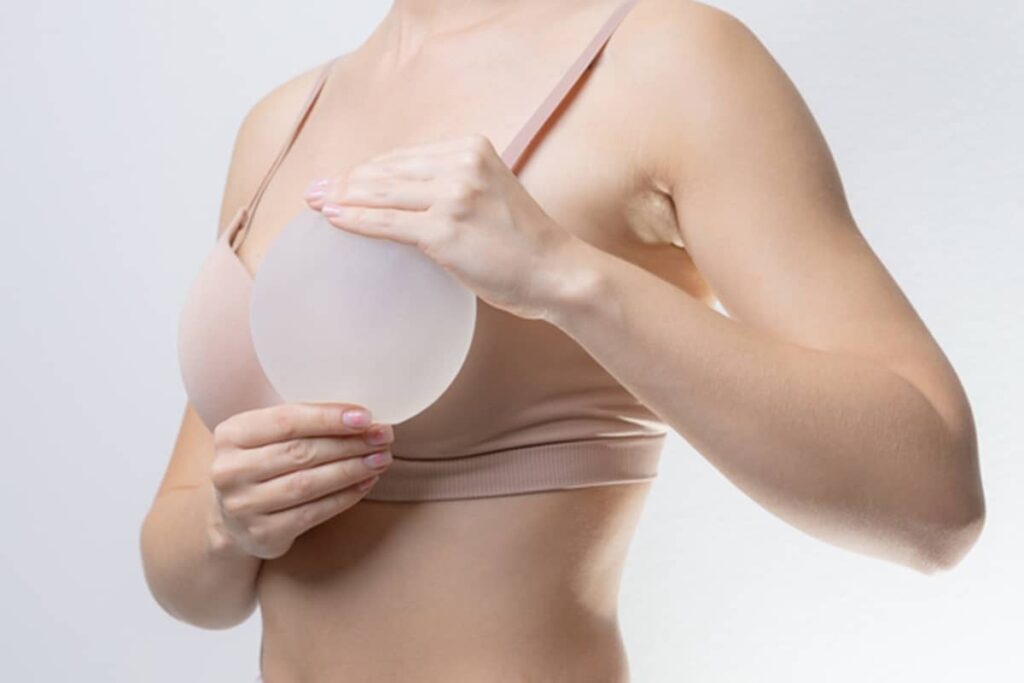
During your consultation, you’ll review sizing options using measurements and visual tools to help you understand how different volumes and profiles will look on your body.
About Dr. David W. Allison
Dr. David W. Allison is a board-certified plastic surgeon providing cosmetic and reconstructive surgery of the breast and body. With more than 21 years of surgical experience, he offers breast augmentation procedures tailored to each patient’s anatomy, goals, and long-term health considerations.
He emphasizes careful surgical planning, patient education, and individualized treatment strategies designed to support both aesthetic results and functional outcomes. Patients receive comprehensive guidance throughout the consultation process to help them make informed decisions about breast surgery.
Schedule Your Personalized Breast Implant Consultation with Dr. David Allison in New Jersey or Philadelphia
Choosing the right breast implant is important, but choosing the right surgeon is even more important.
Board-certified plastic surgeon Dr. David Allison provides individualized breast augmentation planning tailored to your body and goals. Patients throughout New Jersey and Philadelphia trust his experience, attention to detail, and patient-centered approach.
If you’re considering breast augmentation surgery, now is the time to take the next step. Schedule your private consultation today to receive expert guidance and a customized treatment plan designed specifically for you.
Frequently Asked Questions About Breast Implants